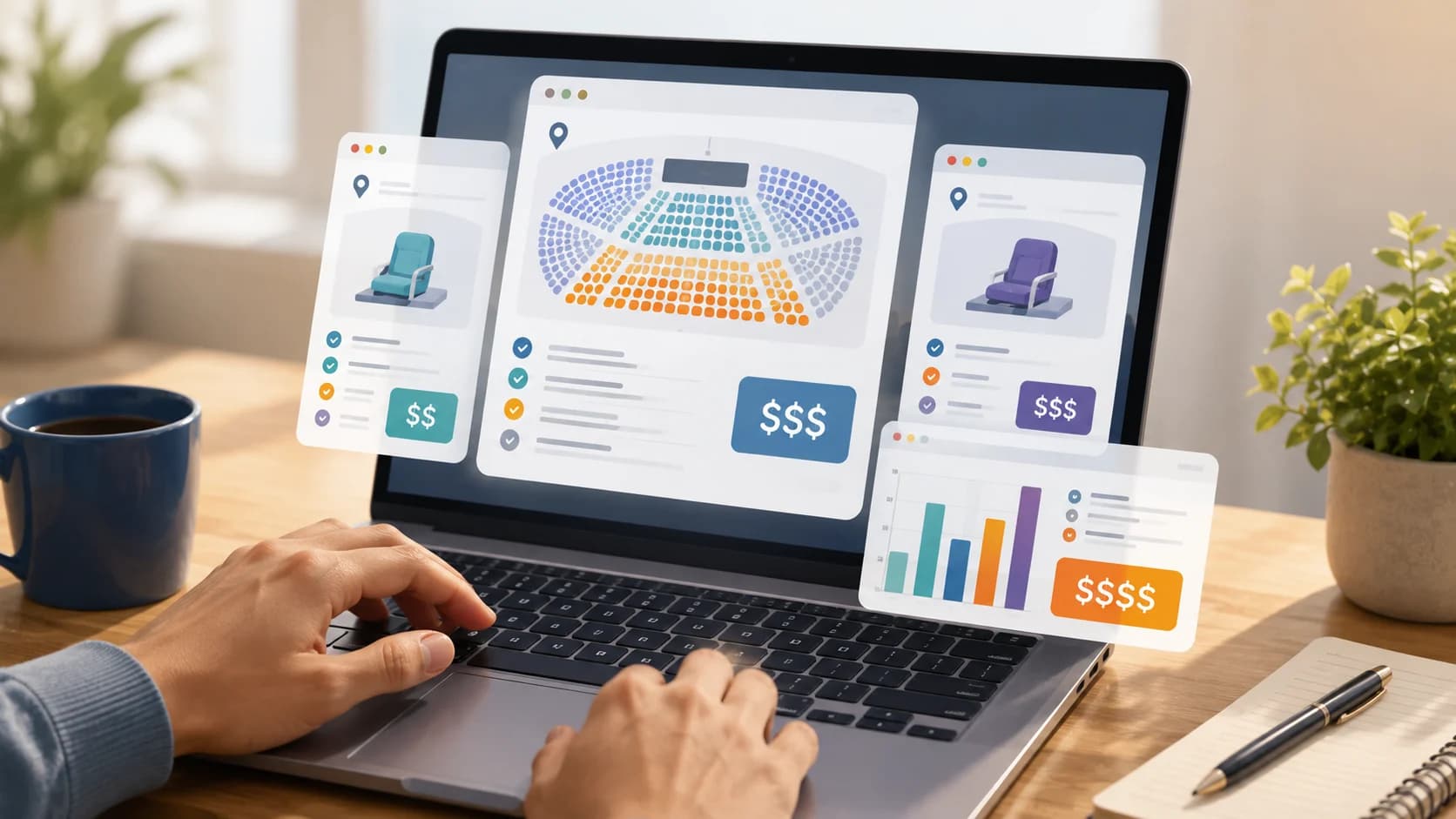
A ticket aggregator is a website that gathers ticket listings from multiple marketplaces into a single search, so you can compare prices, seats, and sellers before deciding where to buy. Instead of opening five or six ticketing sites one at a time, you search once and see the available options side by side.
| What it is | A website that gathers ticket listings from several marketplaces into one search |
|---|---|
| What it does | Lets you compare price, seat location, and seller across multiple marketplaces at once |
| Where you actually buy | You're sent to the marketplace holding the listing to complete your purchase |
| Cost to use | Free to search and compare; fees and final price appear at checkout on the marketplace |
What Is a Ticket Aggregator, Exactly?
A ticket aggregator sits on top of the existing ticketing landscape rather than replacing it. Instead of holding its own inventory, it connects to multiple ticket marketplaces and pulls in the listings that match the event you're searching for.
The idea is similar to how a flight search engine gathers fares from different airlines, or a hotel comparison site pulls rates from different booking platforms - the aggregator's job is to make comparison easy, not to be the seller itself.
For live events, that distinction matters because ticket prices for the same seat can vary noticeably from one marketplace to another. An aggregator gives you a single place to see those differences instead of tracking them down manually.
How Does a Ticket Aggregator Work?
The basic mechanics are similar across most ticket aggregators:
• You search for an event, artist, team, or venue.
• The aggregator scans listings from its connected marketplaces in real time.
• Matching listings are displayed together, typically with price, section, and seller information.
• You choose the listing that fits your budget and seating preference.
• You're routed to the marketplace holding that listing to complete the purchase.
This last step is what distinguishes an aggregator from a marketplace. The comparison happens on the aggregator; the transaction, payment, and ticket delivery happen on whichever marketplace you select.
Ticket Aggregator vs. Primary Ticketing Site: What's the Difference?
A primary ticketing site is the official first point of sale for an event - tickets sold directly by the venue, promoter, or artist, usually at face value. A ticket aggregator doesn't issue tickets on behalf of an event; it searches across marketplaces, which may include resale listings and, in some cases, primary inventory where it's available through a connected partner.
If you specifically want face-value pricing, the venue or promoter's official site is generally the first place to check before comparing resale options.
Ticket Aggregator vs. Resale Marketplace: What's the Difference?
A resale marketplace, hosts listings from individual sellers on its own platform and handles the transaction directly. A ticket aggregator doesn't host its own inventory in the same way - it searches across several marketplaces at once and surfaces listings from more than one source in a single results page.
In short: a marketplace is one source of listings; an aggregator is a way to view several sources together.
What Are the Benefits of Using a Ticket Aggregator?
• Time savings - one search instead of checking each marketplace separately.
• Price visibility - it's easier to see how a listing's price compares to similar seats elsewhere.
• Broader seat selection - combining marketplaces generally surfaces more available inventory than any single site.
• Easier outlier spotting - prices that are unusually high or suspiciously low stand out more clearly when you can see several listings for the same event at once.
Are Ticket Aggregators Safe to Use?
Searching and comparing prices on an aggregator doesn't carry transaction risk on its own, since you're not entering payment details or completing a purchase on the aggregator itself. The safety of the purchase depends on the marketplace you ultimately choose.
Before checking out, look for a verified or guaranteed-ticket policy, a secure electronic transfer method rather than a screenshot or forwarded email, and a clear refund policy in case the event is canceled or rescheduled.
What Should You Check Before Buying Through an Aggregator?
| Same event and date | Confirm every listing you're comparing is for the exact same show, not a different date or city |
|---|---|
| Same section or seat type | A lower price often means a different section - compare like for like before deciding |
| Total price, not just the headline number | Service and delivery fees are usually added at checkout, so check the final total |
| Delivery method and timing | Mobile transfer, PDF, or physical delivery - and whether tickets arrive immediately or closer to the event |
| Refund or exchange policy | Policies vary by marketplace and seller, so check before you commit |
How TicketWhiz Works as a Ticket Comparison Site
TicketWhiz works the way described above: you search for an event once, and TicketWhiz shows available listings from multiple marketplaces side by side so you can compare price, section, and seller.
Comparing is free - when you're ready to buy, you're taken to the marketplace holding your chosen listing to complete the purchase there.
This is useful for concerts, sports, and theater events where the same seat can be listed at different prices across sites.
If you're planning to buy tickets for an upcoming show, you can compare concert tickets or compare sports tickets to see what's currently available across marketplaces.
Frequently Asked Questions
What is a ticket aggregator?
A ticket aggregator is a website that collects ticket listings from multiple marketplaces and displays them together, so you can compare prices and seats in one search instead of checking each site individually.
Is a ticket aggregator the same as a resale marketplace?
No. A resale marketplace hosts its own listings from individual sellers. A ticket aggregator searches across several marketplaces at once and shows you listings from more than one source in a single results page.
Do ticket aggregators sell tickets directly?
Generally no. Most aggregators are a comparison layer - you complete the actual purchase on the marketplace that holds the listing you choose, using that marketplace's checkout, payment, and delivery process.
Are ticket aggregators safe to use?
Using an aggregator to compare prices doesn't carry the transaction risk itself, since you're not paying the aggregator. Safety depends on the marketplace you ultimately buy from, so check for buyer protection, verified-ticket guarantees, and secure transfer methods before checking out.
How do ticket aggregators make money?
Most aggregators earn a referral or affiliate commission when a user clicks through and completes a purchase on a partner marketplace, rather than charging users a fee to search or compare.
Is TicketWhiz a ticket aggregator?
Yes. TicketWhiz searches multiple ticket marketplaces for a given event and displays the available listings side by side, so you can compare prices and seating before choosing where to buy.