Quick Answer
The 2026 US Open runs August 23 to September 13 at the USTA Billie Jean King National Tennis Center, offering a record $108 million prize pool with $5.5 million going to each singles champion. The tournament is currently in its quarterfinal stage, with storylines including a possible American men's champion for the first time in 23 years, Aryna Sabalenka chasing a third consecutive women's title, and Carlos Alcaraz defending his crown. See live ticket listings on the US Open Tennis Tickets hub page.
The US Open has always billed itself as tennis's loudest, brashest Grand Slam, and the 2026 edition has lived up to that reputation before a single ball was even struck in the main draw.
Between a record-shattering prize pool, late withdrawals shaking up the seedings, and a genuine chance for American tennis to end one of its longest droughts, this year's tournament has been must-watch from the opening round through the business end of the draw. Whether you're catching up on everything that's happened so far or planning to see the final rounds live at Flushing Meadows, here's a complete breakdown of where things stand.
Tournament Dates and Format
The 2026 US Open runs from August 23 through September 13 at the USTA Billie Jean King National Tennis Center in Flushing Meadows, Queens. As with every Grand Slam, the singles draws are single-elimination brackets of 128 players each for the men's and women's fields, meaning a player needs to win seven consecutive matches to lift the trophy.
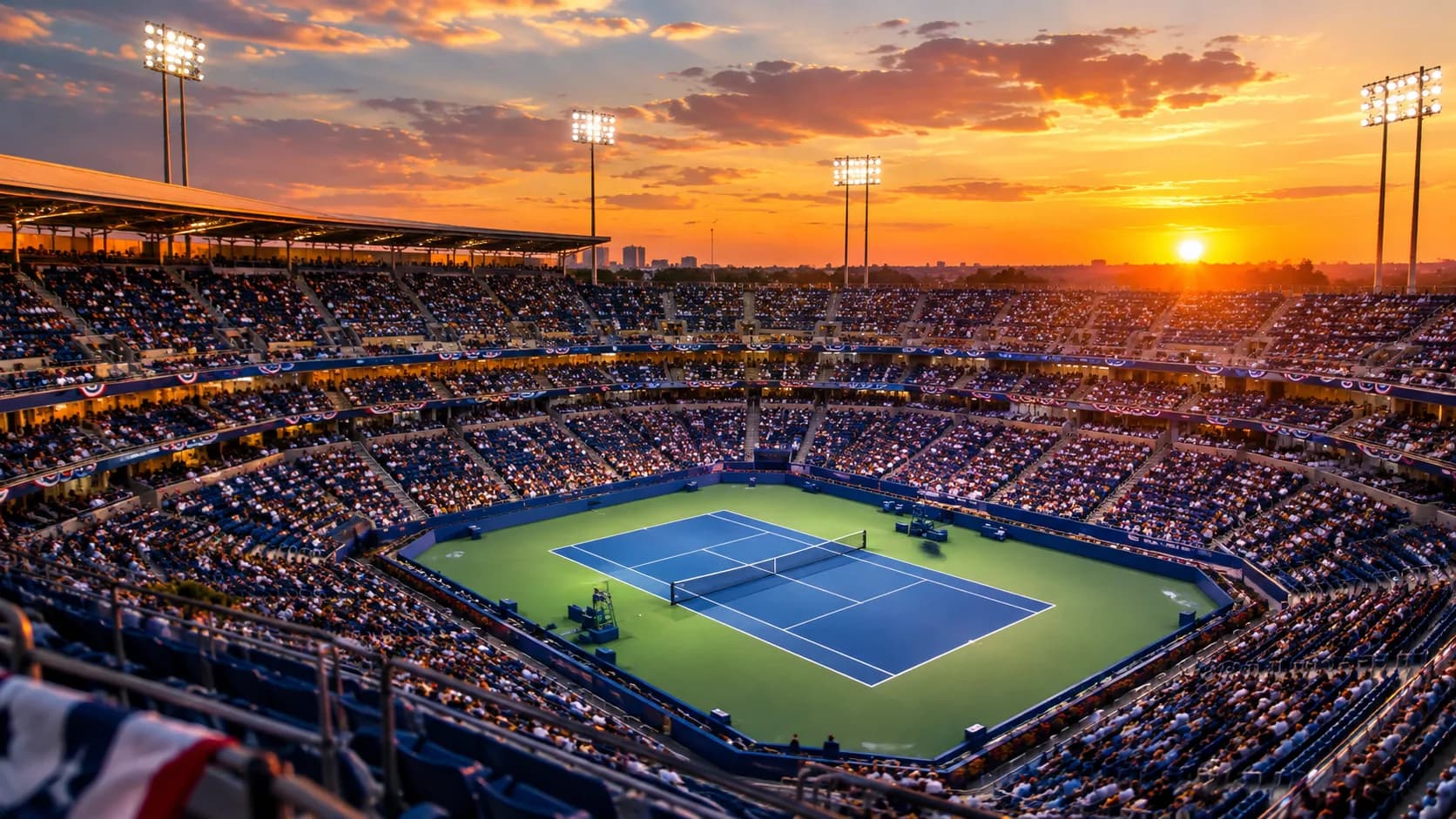
The tournament is played on hard courts across three primary show courts - Arthur Ashe Stadium, Louis Armstrong Stadium, and the Grandstand - along with a network of outer courts used for early rounds, qualifying, and doubles play.
Day sessions typically begin around 11:00 a.m. Eastern Time, with night sessions on Arthur Ashe starting at 7:00 p.m. The tournament's later rounds, including the semifinals and both finals, are reserved for the two biggest show courts, with the women's final traditionally played on the second Saturday and the men's final closing out the tournament on the final Sunday.
A Record-Breaking Prize Pool
If there's one storyline that's dominated headlines before the tournament even started, it's money. The USTA announced a total prize pool of $108 million for the 2026 US Open, a 20 percent increase over 2025's already-record $90 million purse and the largest prize pool in tennis history.
Both singles champions will take home $5.5 million each, up from $5 million a year ago, while even a first-round exit now guarantees a player $140,000 - more than some players earn for winning smaller tour-level events entirely.
The increase reflects growing pressure from top players, including Carlos Alcaraz, Jannik Sinner, Aryna Sabalenka, and Daniil Medvedev, who have pushed for players to receive a greater share of Grand Slam revenue.
The USTA has also committed an additional $2 million toward a new Player Support Program designed to fund retirement benefits and transition support for touring professionals. Here's how the round-by-round singles payouts break down:
| Round | Prize Money (per player) |
|---|---|
| Champion | $5,500,000 |
| Runner-Up | $2,800,000 |
| Semifinalist | $1,450,000 |
| Quarterfinalist | $780,000 |
| Round of 16 | $480,000 |
| Round of 32 | $290,000 |
| Round of 64 | $190,000 |
| Round of 128 (First Round) | $140,000 |
Doubles and mixed doubles champions each take home $1 million per team, with runners-up earning $500,000. The singles prize pool alone accounts for roughly $63 million of the total purse - nearly two-thirds of the entire tournament's prize money.
The Biggest Storylines of the 2026 US Open
Beyond the record paycheck, this year's tournament has no shortage of genuine drama heading into the second week.
Can an American finally win the men's title?
It's been 23 years since an American man has lifted the US Open trophy, and this year's field feels different. Taylor Fritz enters as a former US Open finalist, Ben Shelton arrives fresh off back-to-back Montreal Masters titles, and Frances Tiafoe has become a fixture in the second week of majors.
With Tiafoe already through to the quarterfinals after eliminating former champion Daniil Medvedev, and Shelton and Fritz both in strong form, American tennis has as good a shot at ending the drought as it's had in years.
Can Aryna Sabalenka make history?
The defending champion is chasing a third consecutive US Open title, which would make her just the third woman in the Open Era to win three straight championships at Flushing Meadows.
Sabalenka has looked sharp through the early rounds and now faces Wimbledon champion Linda Noskova in the quarterfinals - a genuine title-contender matchup this early in the second week.
Can Alcaraz defend his crown?
Carlos Alcaraz enters as the defending men's champion after beating Jannik Sinner in last year's final, a result that capped off his sixth career Grand Slam title. Alcaraz has cruised through the draw so far, dropping just Tommy Paul in the fourth round before setting up a quarterfinal against American Ben Shelton - a matchup that pits Alcaraz's all-court game against Shelton's raw power in front of a partisan New York crowd.
Coco Gauff's Cincinnati momentum.
Gauff arrived in New York fresh off a title run at the Cincinnati Open, where she dropped just one set the entire tournament. That form has carried into Flushing Meadows, where she's advanced through the draw and set up an all-American Round of 16 showdown against fellow American Iva Jovic - a match that underlined just how deep the American women's field has become.
An unusually open women's draw.
Beyond Sabalenka and Gauff, contenders like Jessica Pegula, Iga Świątek, and Emma Navarro have all advanced deep into the tournament, making this one of the more unpredictable women's draws in recent US Open history.
Where the Tournament Stands Right Now
As of this writing, the tournament has moved into the quarterfinal round. Confirmed quarterfinal matchups include Carlos Alcaraz against Ben Shelton, Frances Tiafoe against Alex Michelsen, Aryna Sabalenka against Linda Noskova, and Jessica Pegula against Emma Navarro - with the remaining matchups determined by the final Round of 16 matches, including Coco Gauff against Iva Jovic and Iga Świątek against Zheng Qinwen.
What's Left on the Schedule
Here's exactly what's left on the calendar through the men's singles final:
| Round | Dates |
|---|---|
| Quarterfinals | Tuesday, Sept 8 – Wednesday, Sept 9 |
| Women's Semifinals | Thursday, Sept 10 |
| Men's Semifinals | Friday, Sept 11 |
| Women's Singles Final | Saturday, Sept 12 |
| Men's Singles Final | Sunday, Sept 13 |
Day sessions typically start at 11:00 a.m. ET (noon on Arthur Ashe Stadium), and night sessions on Arthur Ashe begin at 7:00 p.m. ET.
How to Watch the Rest of the Tournament
Coverage of the remaining rounds continues on ESPN and ESPN2, with Spanish-language coverage available on ESPN Deportes. Every court streams live through the ESPN app for subscribers with ESPN Unlimited, meaning fans can follow outer-court matches even when the featured broadcast is focused elsewhere.
Planning to Attend: Tickets, Seating, and Cost
With the semifinals and both finals still ahead, this is the best remaining stretch to see marquee tennis in person - and also the most expensive, as ticket prices climb sharply the deeper the tournament goes.
Grounds passes, which grant access to outer courts but not the main stadiums, remain the most affordable way to experience the tournament atmosphere, while stadium seats for the semifinals and finals carry a significant premium given the guaranteed star power on court.
• Not sure which ticket type fits your budget? See how US Open tickets work.
• Wondering why semifinal and final prices climb so fast? Here's why US Open tickets get so expensive in the tournament's final stretch.
• Deciding between a stadium seat and a grounds pass? Check whether a grounds pass is worth it at this stage of the tournament.
• Planning your seat? Here's the full US Open seating guide for Arthur Ashe, Louis Armstrong, and the Grandstand.
Compare current listings across every remaining session on the US Open Tennis Tickets hub page before you book.
A Brief History of the US Open
The US Open traces its roots back to 1881, making it one of the oldest tennis championships in the world, alongside Wimbledon. Originally played on grass courts and later on clay, the tournament moved to its current hard-court surface in 1978 and has been held at the USTA Billie Jean King National Tennis Center - named in honor of the pioneering champion and equal-pay advocate - since 1978 as well.
Unlike Wimbledon's more conservative traditions, the US Open has long embraced a louder, more raucous atmosphere, complete with late-night sessions, a boisterous New York crowd, and a reputation for producing some of the sport's most dramatic finishes.
The tournament has crowned some of the sport's greatest champions, from Billie Jean King and Chris Evert to Pete Sampras, Serena Williams, and Novak Djokovic. In recent years, the men's draw has been defined by the rivalry between Carlos Alcaraz and Jannik Sinner, while the women's draw has seen a mix of dominant champions and first-time Grand Slam winners emerge from an increasingly competitive field.
Player Spotlight: Who to Watch in the Second Week
Carlos Alcaraz (Spain, defending champion).
Alcaraz arrives in New York as one of the most complete players of his generation, blending elite movement with a genuine all-court game that has no obvious weakness.
His 2025 title run, capped by a win over Jannik Sinner in the final, was his sixth career Grand Slam title, and he's shown no signs of slowing down through the early rounds this year.
A win over Ben Shelton in the quarterfinals would put him one step closer to defending his crown against a field that, on paper, has few players capable of matching his ceiling on a hard court.
Aryna Sabalenka (Belarus, defending champion).
Sabalenka's game is built around one of the most powerful serves and forehands in the women's draw, and she's used both to bulldoze through the early rounds in pursuit of a third straight title.
A win this year would place her in genuinely rare company - only two other women have won three consecutive US Open titles in the Open Era - and her quarterfinal matchup against Wimbledon champion Linda Noskova is arguably the most anticipated women's match of the round.
Ben Shelton, Frances Tiafoe, and Taylor Fritz (USA).
All three American men have built genuine cases for ending the sport's longest active Grand Slam drought for the host nation. Shelton's back-to-back Montreal Masters titles suggest he's peaking at exactly the right time, Tiafoe has become one of the most reliable second-week performers at the majors, and Fritz's run to the 2025 final proved he can go the distance on this exact stage. Whichever of the three goes furthest, expect Arthur Ashe Stadium to be at its loudest.
Coco Gauff (USA).
Gauff's Cincinnati Open title heading into New York wasn't just a confidence boost - it was a statement that her game has taken another step forward. Dropping only one set across an entire ATP 1000-level event is a rare feat, and she's carried that same form into Flushing Meadows. A deep run here would add to an already impressive résumé that includes a US Open title of her own from 2023.
Jessica Pegula and Emma Navarro (USA).
Both players represent the depth of the current American women's field. Pegula has been a fixture in the second week of majors for several years running, while Navarro has quietly built one of the more underrated résumés on tour. Their quarterfinal meeting guarantees an American semifinalist from that half of the draw.
What Makes the US Open Different From Other Grand Slams
Every Grand Slam has its own identity, and the US Open has always leaned into being the loudest and most electric of the four. Unlike Wimbledon's all-white dress code and hushed decorum, the US Open embraces late-night matches, walk-up music, and a crowd that isn't shy about making noise mid-rally.
Arthur Ashe Stadium, the largest tennis venue in the world, was purpose-built to host that atmosphere, and night sessions under the lights have produced some of the sport's most iconic moments - from five-set marathons stretching past 2 a.m. to breakout runs by unseeded players riding crowd energy deep into the second week.
The tournament's hard-court surface also plays faster and bouncier than the clay of Roland-Garros or the grass of Wimbledon, rewarding big serves and aggressive baseline hitting.
That style suits many of the current American contenders, which is part of why this year's home-nation storylines carry extra weight - the surface itself favors the kind of power tennis that Shelton, Fritz, and Gauff all play.
Combined with the tournament's willingness to schedule blockbuster matches deep into the night for prime-time television, the US Open has built a reputation as appointment viewing even for casual sports fans who don't follow tennis closely the rest of the year.
Frequently Asked Questions
When is the 2026 US Open?
The 2026 US Open runs from August 23 to September 13 at the USTA Billie Jean King National Tennis Center in Flushing Meadows, New York.
How much prize money is the US Open giving out in 2026?
The 2026 US Open is awarding a record $108 million in total prize money, with singles champions earning $5.5 million each.
Who are the defending champions?
Carlos Alcaraz is the defending men's champion, having beaten Jannik Sinner in the 2025 final. Aryna Sabalenka is the defending women's champion and is chasing a third consecutive title in 2026.
When is the US Open final?
The women's singles final is Saturday, September 12, and the men's singles final is Sunday, September 13.
Can I still get tickets to the US Open?
Yes - tickets remain available for the quarterfinals, semifinals, and finals through resale marketplaces, though prices rise sharply as the tournament narrows. Compare live listings here.