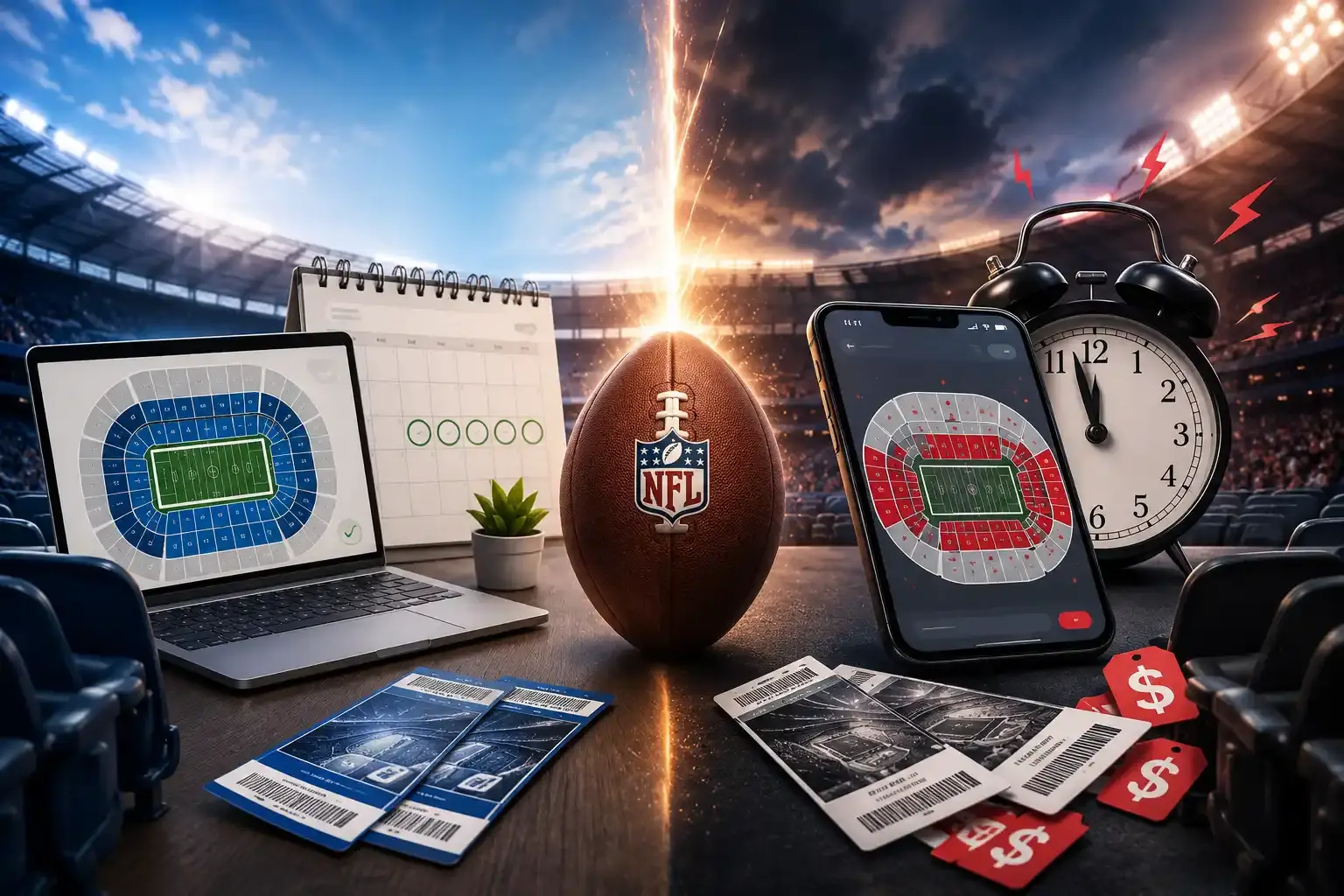
In most cases, waiting to buy NFL tickets closer to game day saves you more money often 10% to 30% less than booking months out. Data from ticket resale platforms consistently shows that regular-season NFL tickets purchased within a week of kickoff, and especially in the final 48 hours, cost noticeably less than tickets bought right after the schedule drops. The exception is high-demand games — rivalry matchups, playoff rounds, or a team on a winning streak — where waiting can backfire because seats sell out or jump in price.
So which approach is right for you? It depends on the game, your budget, and how much risk you're willing to take. Buying early guarantees you a seat and lets you lock in a price before hype builds. Buying last minute is a gamble that usually pays off in dollars but not always in seat selection. Below, we break down exactly how NFL ticket pricing behaves over time, what real price ranges look like across today's top ticketing platforms, and how to time your purchase so you're not the one overpaying while everyone else finds a deal.
What Determines NFL Ticket Prices in the First Place?
Before comparing early versus last-minute buying, it helps to understand what actually moves NFL ticket prices. It isn't random — pricing responds to a handful of predictable factors:
Matchup and rivalry status – A divisional rivalry or a game against a marquee team (think Cowboys, Chiefs, or Eagles) commands a premium regardless of when you buy.
Team performance – A hot streak or a playoff push drives prices up in real time, sometimes within days.
Seat location – Upper-deck and end-zone seats behave very differently in price than club-level or lower-sideline seats.
Day and time of game – Weekday and early-season games tend to be cheaper than Sunday primetime or holiday matchups.
Market size – Tickets in larger markets with passionate fan bases (Green Bay, Dallas, Kansas City) sit at a higher baseline than smaller markets.
Timing of purchase – This is the variable we're focused on, and it interacts with everything above.
Once you understand these levers, the early-vs-last-minute question becomes much easier to answer for your specific situation. If you're curious how this timing strategy plays out across other leagues too, our guide on the best time to buy sports tickets breaks down the same principles for the NBA, MLB, and NHL.
Is It Cheaper to Buy NFL Tickets Early?
Buying early has one guaranteed benefit: certainty. You get first pick of seat location, you avoid the risk of a sellout, and you lock in a price before news events (a big trade, a hot streak, a playoff clinch) push demand up.
But on pure cost, early buyers usually pay more. Ticket data analysts have found that fans who purchase resale NFL tickets three months or more before kickoff typically pay a few percentage points above the season average — and for marquee games, the gap is much wider. Early pricing reflects peak uncertainty and peak demand: everyone wants to grab seats before they're gone, and sellers know it.
Early buying makes the most sense when:
The matchup is a known high-demand game (home opener, rival, primetime nationally televised game)
You're traveling and need to lock in seats, hotels, and flights together
You're buying for a group and can't risk limited last-minute inventory
Is It Cheaper to Buy NFL Tickets Last Minute?
For most regular-season games, yes — last-minute buying tends to win on price. Multiple ticket-market studies show that resale prices trend downward as game day approaches, with some of the steepest discounts appearing in the final three to six days before kickoff. A meaningful share of all secondary-market NFL tickets change hands during the week of the game, and buyers in that window often pay noticeably less than the season average.
Why does this happen? Sellers who bought tickets weeks earlier but can no longer attend would rather recover some of their money than let the ticket go to waste. As kickoff nears, that urgency pushes prices down — especially for non-marquee matchups where demand isn't sky-high to begin with.
The catch: last-minute buying is not risk-free. Inventory shrinks, and for popular games, the "cheap" tickets disappear early while only premium seats remain. If you need a specific number of seats together, or you're traveling from out of town, waiting until the last minute can leave you scrambling.
How Much Do NFL Tickets Cost Right Now? (Price Table Analysis)
Ticket pricing varies by platform type, and shopping around genuinely matters. Here's a general snapshot of typical price ranges across different kinds of ticketing sources for a regular-season game, based on current listings:
| Seating Tier | Official Team/League Marketplace | Multi-Site Price Comparison Tool | Independent Resale Marketplace |
|---|---|---|---|
| Upper deck / nosebleed | $60–$110 | $50–$95 | $50–$100 |
| Lower-level sideline | $150–$300 | $140–$260 | $150–$250 |
| Club level / premium | $350–$1,000+ | $320–$900 | $200–$500+ |
A few takeaways from this kind of side-by-side view:
Official marketplaces often set the pricing baseline (face value plus fees), which can run higher than resale for the same seat once a game is well past initial release.
Price-comparison tools that aggregate multiple resellers frequently surface the lowest available price for a given section, since they're pulling from many sellers at once.
Independent resale marketplaces tend to be the most volatile — prices can spike for hot games or drop sharply in the final days for games with soft demand.
This is exactly why checking more than one source before buying is non-negotiable if you want the best deal. If you want to see this in action for any event, not just NFL games you can Compare Event Tickets Across Major Sites in one place instead of checking each platform separately.
Not sure how official pricing differs from resale in the first place? Our breakdown of the primary vs. secondary ticket market explains exactly how each one sets its prices and which tends to work in the buyer's favor.
Early vs. Last-Minute: Which Strategy Actually Saves More?
Putting it all together: for an average, non-marquee regular-season game, last-minute buying (within the final week, and especially the final 1–3 days) tends to save more money — often 10% to 30% compared to buying two or three months out. For high-demand or sold-out-risk games, early buying protects you from paying far more later, or not getting in at all.
A simple rule of thumb: if the game is popular enough that it might sell out, buy early. If it's a mid-tier matchup with plenty of available inventory, wait — and watch prices drop as kickoff approaches.
What's the Best Time to Buy Tickets for Playoff and Super Bowl Games?
Playoff pricing behaves a bit differently than the regular season. Because opponents for most rounds are only confirmed about a week before kickoff, price data shows the cheapest average prices typically land the day before the game for both divisional and championship rounds. Waiting even 24–48 hours before playoff kickoff has historically delivered meaningfully lower prices than buying the moment the matchup is announced.
The Super Bowl is the outlier. Prices can still drop in the final days before the game as supply increases, but the overall price floor is dramatically higher than any regular-season or even conference-championship game, often running into the thousands of dollars per ticket regardless of timing.
If you're mapping out which games are worth targeting early versus which ones to wait on, our 2026 NFL schedule guide lays out the full season's key matchups and dates so you can plan your buying strategy game by game.
Tips to Save More Whether You Buy Early or Late
Set price alerts
on multiple platforms so you're notified when prices dip.
Target weekday and early-season games
— demand and pricing are naturally lower.
Compare seating tiers
, not just sections — moving back a few rows can cut the price significantly.
Check multiple sources before checkout
rather than buying from the first listing you see.
Buy early only for known high-demand games
; otherwise, let prices come to you.
Watch for playoff clinching scenarios
— prices can jump the moment a team secures a spot.
Conclusion
There's no single "always right" answer to buying NFL tickets early versus last minute — but the data leans in favor of patience. For most regular-season games, prices tend to soften as kickoff approaches, rewarding fans who can wait. For marquee matchups, playoff runs, and the Super Bowl, early action protects you from paying a steep premium or missing out entirely. The smartest approach is a hybrid one: lock in early only when a game is genuinely high-demand, and otherwise monitor prices across multiple platforms so you can pounce the moment a good deal appears.
People Also Ask
Do NFL ticket prices drop closer to game day?
For most regular-season games, yes. Prices commonly trend downward in the final week before kickoff, with some of the biggest drops in the last few days, as sellers who can't attend look to recoup their cost rather than lose it entirely.
What is the cheapest way to buy NFL tickets?
Comparing prices across multiple ticketing platforms before purchasing is generally the most reliable way to find the lowest price, since the same seat can be listed at very different prices depending on the source.
How much do NFL tickets cost on average?
Regular-season NFL ticket prices typically range from around $50–$100 for upper-level seats to $150–$300 for lower-level sideline seats, with premium club seating often exceeding $350–$1,000 depending on the matchup.
What day of the week are NFL tickets cheapest?
Midweek and early-season games tend to have lower demand and softer pricing compared to Sunday primetime, holiday games, or late-season matchups with playoff implications.
Is it risky to wait until the last minute to buy NFL tickets?
Yes, to some extent. While last-minute prices are often lower, popular games can sell out or leave only premium seats available, so waiting works best for games without extremely high demand.
Do NFL playoff ticket prices drop before the game?
Often, yes. Prices for divisional and championship round games have historically been lowest the day before kickoff, though Super Bowl pricing stays elevated regardless of timing due to overwhelming demand.