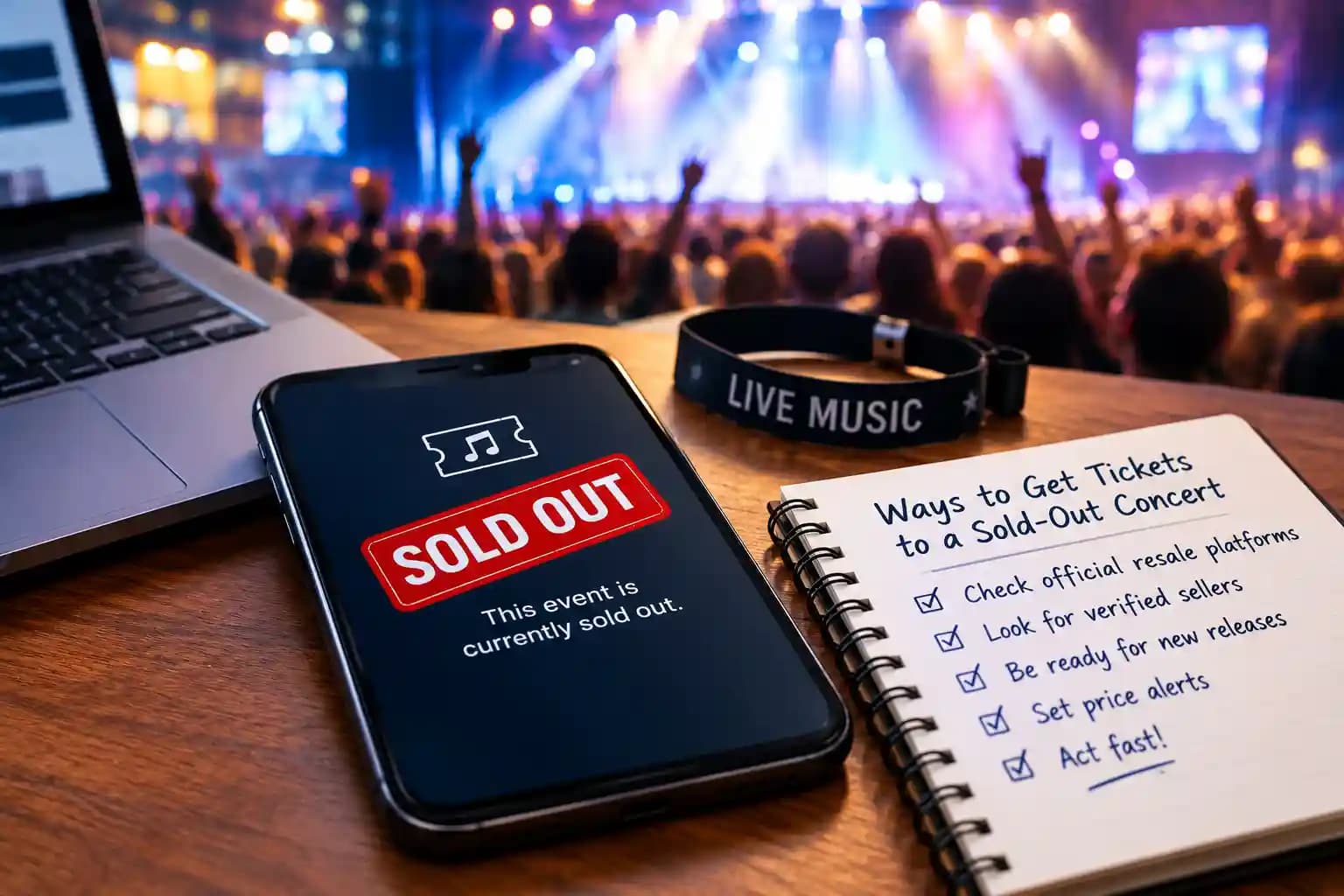
Quick answer: A "sold out" concert usually means the first round of tickets is gone, not that every seat is taken. You can still get in through verified resale marketplaces, official face-value exchanges, late ticket releases, the venue box office, and waitlists. The fastest way is to compare every resale listing at once on TicketWhiz, then check back as the show gets closer, because prices and availability change daily.
Saw the dreaded "Sold Out" banner on the official ticket site? Don't give up yet. Thousands of fans get into sold-out shows every night. This guide walks you through exactly how they do it, and how to avoid paying too much or getting scammed along the way.
Does "sold out" really mean sold out?
Rarely. "Sold out" means the primary seller, usually the official ticketing partner or the venue, has no more tickets to sell at face value right now. Many of those tickets are already back on sale elsewhere.
Tickets keep moving after a sell-out for three main reasons:
- Fans resell. Plans change, friends drop out, and buyers list their seats on major resale marketplaces.
- Held seats get released. Artists, promoters and venues often hold seats for production, guests and sponsors. Any they don't need can go on sale in the final days or weeks before the show.
- Stage layouts change. Once the stage is built, seats that were blocked for sound or camera positions can open up.
The catch is that these tickets are spread across many different websites at many different prices. That's the problem TicketWhiz solves: it shows listings from the major marketplaces side by side, so you see the whole market in one search.
How do you get tickets to a sold-out concert? 8 proven ways
- Compare every resale marketplace at once. This is the quickest route in. The same seat can be listed at different prices on different sites, so checking just one marketplace means you may overpay. Search the artist on TicketWhiz to see listings from all the major ticket marketplaces side by side, then buy on the site you trust.
- Check the official face-value resale first. For some shows, official primary sellers run their own fan-to-fan exchange where tickets are resold at or near the original price. Look on the event page for a resale or exchange option before paying resale-market prices.
- Watch for late ticket drops. Held seats are often released in the last week, and sometimes on the day of the show. Refresh the official event page in the days before the concert, especially in the morning.
- Join the waitlist. Some artists and platforms offer a waitlist or a "notify me" button for sold-out dates. Sign up for every one you find; it costs nothing.
- Call or visit the venue box office. Box offices sometimes get returned or released tickets that never appear online. Calling a day or two before the show, or going in person on show day, can pay off. Find your venue on TicketWhiz, for example Madison Square Garden or Red Rocks Amphitheatre, to see what's on.
- Be flexible on date, city and seat. If one night is sold out, another date on the same tour may not be. A nearby city can be far cheaper too. Browse shows by location on the TicketWhiz cities page. Single seats are also easier to find than pairs, so if your group is willing to split up, you'll have more options.
- Follow the artist, the venue and fan communities. Artists and venues announce extra dates and ticket releases on social media and in newsletters. Fan clubs sometimes run their own presales. Fan forums also share tips, but only buy from people through a platform that protects you (see the scams section below).
- Look at VIP and hospitality packages. These bundles often stay available after regular tickets are gone. They cost more, but they include a guaranteed seat and extras like early entry or merchandise.
Tip: If you're shopping for a big tour, start with the artist's page on TicketWhiz, such as Taylor Swift tickets, or browse all concert tickets.
When is the best time to buy tickets for a sold-out show?
There's no single best time; it depends on how hot the show is. Resale prices move with supply and demand, so the pattern usually looks like this:
- Right after the sell-out: Prices often spike as fans panic-buy. Unless you need certainty, it's usually worth waiting.
- The middle weeks: Prices tend to settle. This is a good time to watch the market and set a budget.
- The final days: Sellers who can't go need to sell, and held seats get released, so prices can drop. For the most in-demand shows, though, they can also rise as supply runs out.
The smart move is to check prices across sites regularly instead of guessing. Comparing on TicketWhiz lets you spot a drop on any marketplace in one search. Always compare the total price at checkout, including fees, not just the listed price.
How do you avoid ticket scams for sold-out concerts?
Sold-out shows attract scammers because desperate fans make rushed decisions. Protect yourself with these rules:
- Buy on established marketplaces. Major resale sites offer buyer guarantees that refund you if tickets are fake or never arrive. Strangers on Facebook, Instagram, X or Craigslist offer no such protection.
- Never pay by bank transfer, gift card, Zelle or crypto. These payments are almost impossible to reverse. Use a credit card, which gives you chargeback rights.
- Be wary of prices that are too good to be true. A front-row seat for half of face value at a sold-out show is almost always a scam.
- Don't trust screenshots of tickets. Most concert tickets are now mobile tickets with rotating barcodes or secure transfers. A screenshot can be sold to many people at once.
- Check the URL. Scam sites copy the look of real ticket sites. Make sure you're on the real domain before you enter card details.
TicketWhiz only sends you to established marketplaces, and you complete your purchase directly on their site, under their buyer protection. Read more in the TicketWhiz FAQ.
Where should you look for sold-out concert tickets?
Each option trades off price, certainty and effort:
| Option | Typical price | Chance of finding tickets | Safety | Best for |
|---|---|---|---|---|
| Resale comparison on TicketWhiz | Market price, lowest across sites | High | High (established marketplaces) | Most fans |
| Official face-value exchange | At or near face value | Low to medium | High | Fans who can wait |
| Late ticket drops | Face value | Low to medium | High | Flexible fans near the venue |
| Venue box office | Face value | Low | High | Locals |
| VIP and hospitality packages | Above face value | Medium | High | Big occasions |
| Social media sellers | Varies | Medium | Low | Not recommended |
Frequently asked questions
Can you still buy tickets after a concert sells out?
Yes. Most sold-out concerts still have tickets on resale marketplaces, where fans resell seats they can't use. Primary sellers may also release held seats closer to the show. Comparing marketplaces on TicketWhiz is the easiest way to see what's available.
Do ticket prices go down closer to the concert?
Often, but not always. Prices for many shows soften in the last few days as sellers try to avoid being left with unused tickets. For the most in-demand concerts, prices can rise instead. Tracking prices over time is safer than waiting until the last minute.
Is it safe to buy resale concert tickets?
It's safe when you buy through established marketplaces with buyer guarantees and pay by credit card. It's risky when you buy from strangers on social media, especially if they ask for bank transfers, gift cards or payment apps.
Why are resale tickets more expensive than face value?
Resale prices are set by sellers based on demand. When a show sells out, demand outstrips supply, so prices rise. Prices also vary between marketplaces because fees and sellers differ, which is why comparing sites matters.
Does the venue box office have tickets for sold-out shows?
Sometimes. Box offices can receive returned or released seats, especially close to show day. It's worth calling ahead or checking in person, but it's not guaranteed.
Does TicketWhiz sell tickets?
No. TicketWhiz is a free comparison tool. It shows listings from major marketplaces side by side and sends you to the marketplace you choose to complete your purchase. TicketWhiz doesn't add any fees.
Don't let "sold out" stop you
Getting into a sold-out concert comes down to three things: knowing where tickets reappear, comparing prices across every marketplace, and staying safe while you buy. Start your search on TicketWhiz to see every listing, seat map and total price in one place, then buy on the site you prefer.
Looking for more ticket-buying tips? Browse the TicketWhiz blog or explore upcoming music festivals.