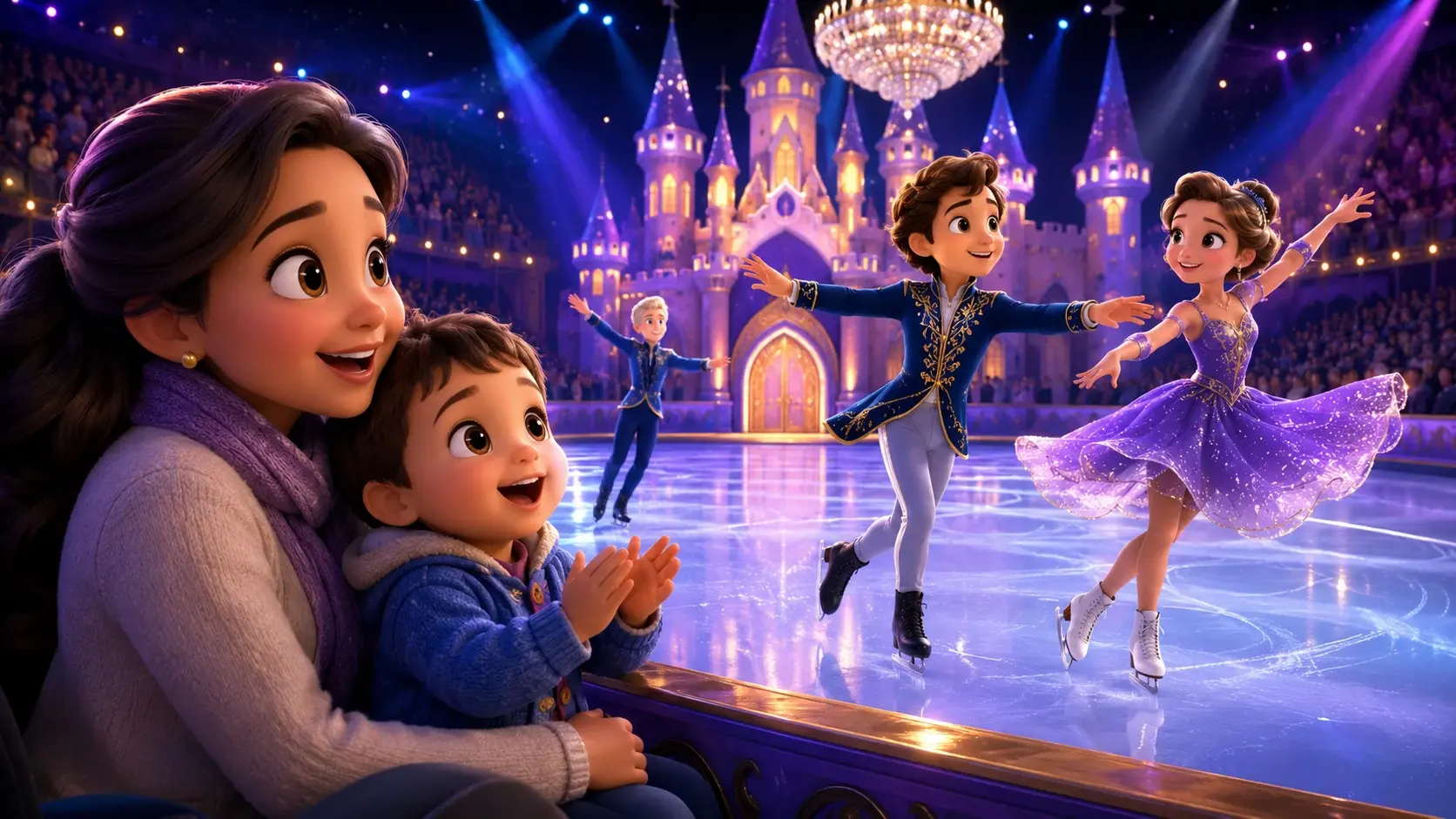
Yes, Disney On Ice is generally a good fit for toddlers. Children under 2 years old are usually admitted free if they sit on a parent’s or guardian’s lap for the entire show, while children age 2 and up typically need their own ticket.
However, ticket-age rules can vary by venue and local event laws, so it’s worth confirming the exact policy on your specific event listing before you buy.
This guide covers what age works best, what to expect if you’re bringing a very young child, and how to plan seating so the show is enjoyable for the whole family.
What Age Is Best for Disney On Ice?
There’s no single “right” age for Disney On Ice, but most families find the show lands best with children roughly 3 years old and up. At that age, kids are usually able to sit through a longer performance, recognize the characters and songs, and engage with the story on ice.
That doesn’t mean younger toddlers can’t enjoy it. Many families successfully bring children age 2 and under, especially if they’re used to sitting through movies or other live shows.
The show is built to hold a young audience’s attention with bright visuals, familiar music and frequent scene changes, which helps even short attention spans stay engaged for at least part of the performance. For more information, you can read our Disney on Ice 2026 full tour dates and locations guide.
A few things to weigh when deciding if your toddler is ready:
• Attention span: Can your child sit for 20–30 minutes at a time, with breaks?
• Sensitivity to noise and lights: The show uses amplified music, sound effects and moments of strobe lighting.
• Nap schedule: Matinee performances tend to work better than evening shows for toddlers who nap.
• Comfort with crowds: Arenas are loud and busy, which can overwhelm some younger children.
If your toddler handles other big, stimulating outings well — a movie theater, a live show, a busy family event — there’s a good chance they’ll enjoy Disney On Ice too.
Can a 2-Year-Old Go to Disney On Ice?
Yes, a 2-year-old can attend Disney On Ice. Whether they need their own ticket depends on the exact age cutoff for that specific event, since policies can differ slightly by venue.
The general industry standard is:
• Children under 2 years old are usually admitted free, provided they sit on an adult’s lap for the entire show.
• Children 2 years old and older are generally required to have their own ticket, even if they’d rather sit on a parent’s lap.
Because this cutoff is based on age at the time of the show - not a fixed birthday policy across every arena - it’s a good idea to check the child-ticket policy listed on your specific event page before you buy. Local venue rules and county regulations can occasionally require a ticket for every attendee regardless of age.
Does a 2-Year-Old Need a Ticket?
In most cases, yes - a child who has turned 2 will need their own ticket to attend Disney On Ice. This is different from children under 2, who are typically allowed in free as a lap child.
If your child’s second birthday falls close to your show date, it’s worth double-checking the policy tied to that exact event, since the age cutoff is enforced at the door based on the child’s current age, not the age when you purchased tickets.
A practical tip: if you’re unsure whether your toddler will want to sit independently or stay on your lap for the whole show, a ticketed seat next to yours gives you flexibility either way, without relying on a lap-child allowance that some venues don’t offer at all.
To know on how much the Disney on ice 2026 ticket costs, you can see our guide.
Can a 3-Year-Old Enjoy Disney On Ice?
Yes. Age 3 is often described by parents as a sweet spot for a first Disney On Ice show. By this age, most children:
• Recognize familiar Disney characters and songs
• Can sit through a matinee performance with an intermission break
• Get excited about the visual spectacle of skating, lighting and costumes
• Are old enough to remember the experience afterward
Three-year-olds will need their own ticket, and it’s worth mentally preparing for a mid-show wiggle break - most kids this age won’t sit perfectly still for the full runtime, and that’s normal.
Is Disney On Ice Too Loud or Long for Young Children?
Disney On Ice runs for approximately 90 minutes, including a short intermission. That total length is reasonable for many toddlers and preschoolers, especially with a break built in, but it can be long for children who are used to shorter attention spans.
On volume and lighting: the show uses amplified sound and staged lighting effects, including strobe lighting during some segments. If your child is sensitive to loud noise or flashing lights, it’s worth planning ahead:
• Bring ear protection (soft earmuffs or earplugs) if your child is noise-sensitive.
• Ask about strobe-lighting timing if your child has photosensitivity concerns.
• Choose a matinee show, which tends to be calmer and better timed around nap schedules than an evening performance.
• Sit toward an aisle so you can step out for a break without disturbing other guests.
Most parents report that even children who get restless partway through still enjoy the parts they watch, and stepping into the concourse briefly is a normal, low-stress option if needed.
What Seats Are Best for Families With Toddlers?
Seat choice matters more for toddlers than for older kids or adults, since young children process the show differently.
A few general guidelines:
• Aisle seats make it easier to step out for a break, a snack, or a bathroom trip without climbing over other guests.
• Seats closer to center ice, rather than the very front row, often help young children follow the full picture — the front row can feel overwhelming and makes it harder to see the whole rink at once.
• Lower-level seats generally offer a clearer, more engaging view for children who are still building the attention span to follow action from a distance.
• Accessible seating and stroller-friendly areas are available at most venues, though the specifics vary by arena — check your event’s venue information for details.
For a deeper look at how seating location affects the experience for different types of guests, see our guide to best Disney On Ice seats.
What Should Parents Bring to Disney On Ice?
A little preparation goes a long way when attending with a toddler. Consider bringing:
• Layers - arenas tend to run cold, especially near the ice
• A light snack and a spill-proof water cup, if allowed by the venue
• Ear protection, if your child is sensitive to loud sound
• A comfort item, like a small stuffed toy, for younger children
• A stroller, if your venue offers stroller-friendly seating or storage areas
• Entertainment for the car or travel time, in case nap schedules shift
Check your specific venue’s bag policy before you go, since permitted items can vary by arena.
Family Tips for Your First Disney On Ice Show
• Choose a matinee performance when possible — it tends to align better with toddler nap schedules and is generally a calmer environment than an evening show.
• Arrive early to avoid a rushed entrance, find your seats calmly, and let your child adjust to the noise and lights before the show starts.
• Set expectations, not pressure. Some toddlers watch the entire show; others watch in bursts. Either is a normal experience for a first show.
• Plan for an exit strategy. Knowing where the nearest aisle or exit is can make stepping out for a few minutes far less stressful.
• Talk about it beforehand. Telling your child what to expect - loud music, bright lights, favorite characters - can help ease first-time nerves.
If you’re ready to see what’s currently available, you can compare Disney On Ice tickets and check the child-ticket policy for your city’s show.
Frequently Asked Questions
Can a 2-year-old go to Disney On Ice?
Yes, a 2-year-old can attend. Whether they need their own ticket depends on the exact policy for that event - children under 2 are typically admitted free as a lap child, while children 2 and older generally need a ticket.
Does a 2-year-old need a Disney On Ice ticket?
In most cases, yes, once a child has turned 2. Always confirm the specific age cutoff and policy listed on your event page, since rules can vary by venue.
What is the youngest age for Disney On Ice?
There’s no minimum age requirement to attend. Very young infants can typically be brought as lap children, though parents should consider noise levels and show length when deciding if a very young baby is ready for the experience.
Is Disney On Ice good for toddlers?
Yes, many families successfully bring toddlers, particularly age 3 and up. Choosing a matinee show, sitting near an aisle and preparing for a possible mid-show break all help make the experience more enjoyable.
Is Disney On Ice too long for a toddler?
The show runs about 90 minutes with an intermission. That’s manageable for many toddlers, especially with the built-in break, though very young children may need to step out briefly during the performance.